- Our Products
- Inspiration
- Project Planning
- About Us


Range hoods make a bold design statement in today’s kitchens, but they also play a vital role in maintaining air quality and comfort in your cooking space. Installed above a cook top or range, they act as an exhaust fan by venting steam and cooking odors out or recirculating filtered air back into your kitchen. Choosing the right range hood depends on factors such as kitchen layout, cooking habits, ventilation type, and aesthetic preferences. Compare styles and find your ideal kitchen hood.
Wall mount range hoods are installed directly on the wall above a cook top or range and are one of the most popular choices for kitchens without overhead cabinetry. Some are designed to be standalone, while canopy styles are mounted between two cabinets. These hoods combine strong ventilation performance with a visually striking focal point. Wall mount range hoods are typically ducted to vent air outside, making them very effective at removing smoke, grease, and odors. Available in a wide range of widths, finishes, and styles—from a sleek modern stainless steel range hood to more decorative wood range hood designs—they suit both standard and professional-style ranges. Their placement allows for higher airflow capacity and better capture area, making them ideal for frequent or high-heat cooking.
Best for large, open kitchens; grease, smoke and odor control, and frequent cooking
Pros:
Cons:
 Clayton Painted Black with a Straight Valance Range Hood
Under cabinet vent hoods are installed beneath existing kitchen cabinets directly above electric or gas cooktops, making them a practical and space-efficient ventilation solution. They are especially popular in kitchens with limited space or where a clean look is desired. These hoods can be ducted to vent air outside or configured for ductless operation, offering flexibility for different kitchen layouts. Under-cabinet hoods are available in a range of sizes, airflow capacities, and styles; from basic functional models to more powerful designs with enhanced lighting and multiple fan speeds. While typically more compact than wall-mounted or island range hoods, they provide effective everyday ventilation and integrate seamlessly into most standard kitchen designs.
Best for small kitchens and light to moderate cooking
Pros:
Cons:
 Canyon Duraform Breeze with a Hood Valance
Insert, or built-in range hoods are designed to be installed inside cabinetry or decorative enclosures, providing powerful ventilation while maintaining a seamless, integrated kitchen aesthetic. The hood fan insert contains the functional components—fan, filters, and lighting—while the surrounding cabinet or range hood cover is customized to match the kitchen design. These hoods are most often ducted for optimal performance, though some models offer ductless options. Ventilation hood inserts are available in various sizes and airflow capacities, making them suitable for both standard and high-performance gas stove tops. Their concealed design makes them an ideal choice for homeowners who want effective ventilation without a visible appliance dominating the space.
Best for gourmet kitchens of any size and moderate to frequent cooking
Pros:
Cons:
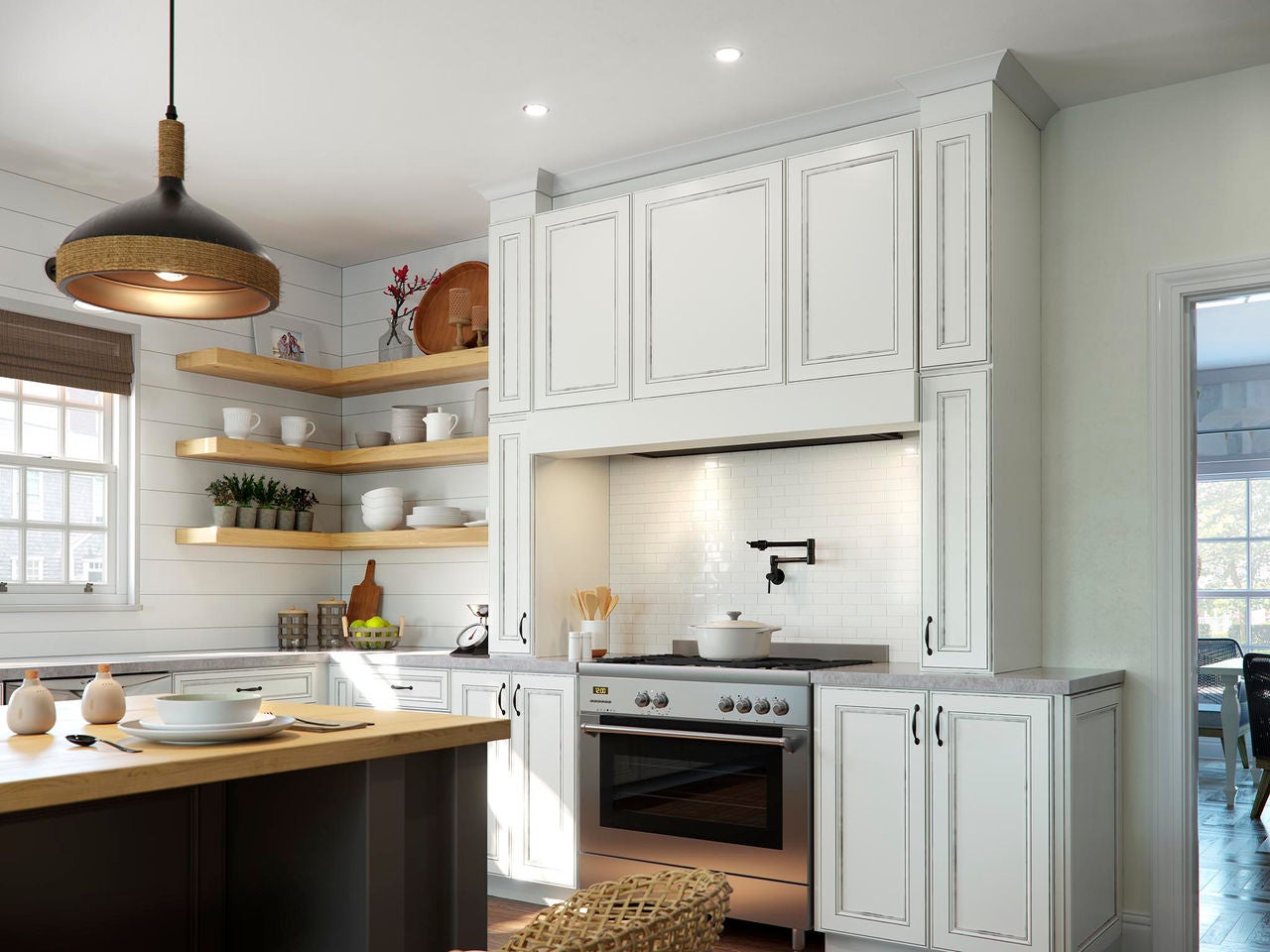 Durango Painted Pewter Glaze with Box Fillers and Decorative Panels
Ceiling Mount
Ceiling mount range hoods are installed on the ceiling above cook tops, usually located at kitchen islands, where no wall or cabinetry is available for support. Because they are exposed on all sides, these hoods typically feature higher airflow capacity and bold, decorative designs to effectively capture smoke and odors while serving as a visual centerpiece in the kitchen.

Downdraft

Downdraft range hoods are installed behind or beside the cook top and pull smoke, steam, and odors downward rather than up, making them a good solution when overhead ventilation is not possible. They are commonly used in island or open-concept kitchens and can retract into the countertop when not in use.
Ducted and ductless vent hoods differ mainly in how they handle cooking air.
Ducted Range Hoods: Smoke, steam, grease, and odors are moved outside the home through ductwork.

Ductless Range hoods: Air is filtered and recirculated back into the kitchen through charcoal or carbon filters

Range hood performance is primarily defined by airflow, fan speeds, and sound levels, all of which determine how effectively and comfortably the hood operates.
What is CFM in fans? CFM is an airflow measurement of cubic feet per minute, this measurement is used to indicate how much air the vent fan can move.
In addition to basic ventilation, many range hoods offer extra features that enhance convenience.


When to Hire a Professional
When DIY is Possible
Make Sure to Measure
Range hood filters, trim, panels and other parts are key components that must be maintained regularly to manage both performance and appearance.


**Always review appliance specifications and any code requirements before purchasing
1951 Cabinetry offers many options for adding a new range hood to your kitchen
Explore all of our range hood styles at https://1951cabinetry.com/all-products/decorative-accessories. Better yet, use our distributor locater and discover where to buy 1951 Cabinetry near you. You can also follow 1951 Cabinetry on Facebook, LinkedIn, and Pinterest to be the first to find out about new products and fresh design ideas!